
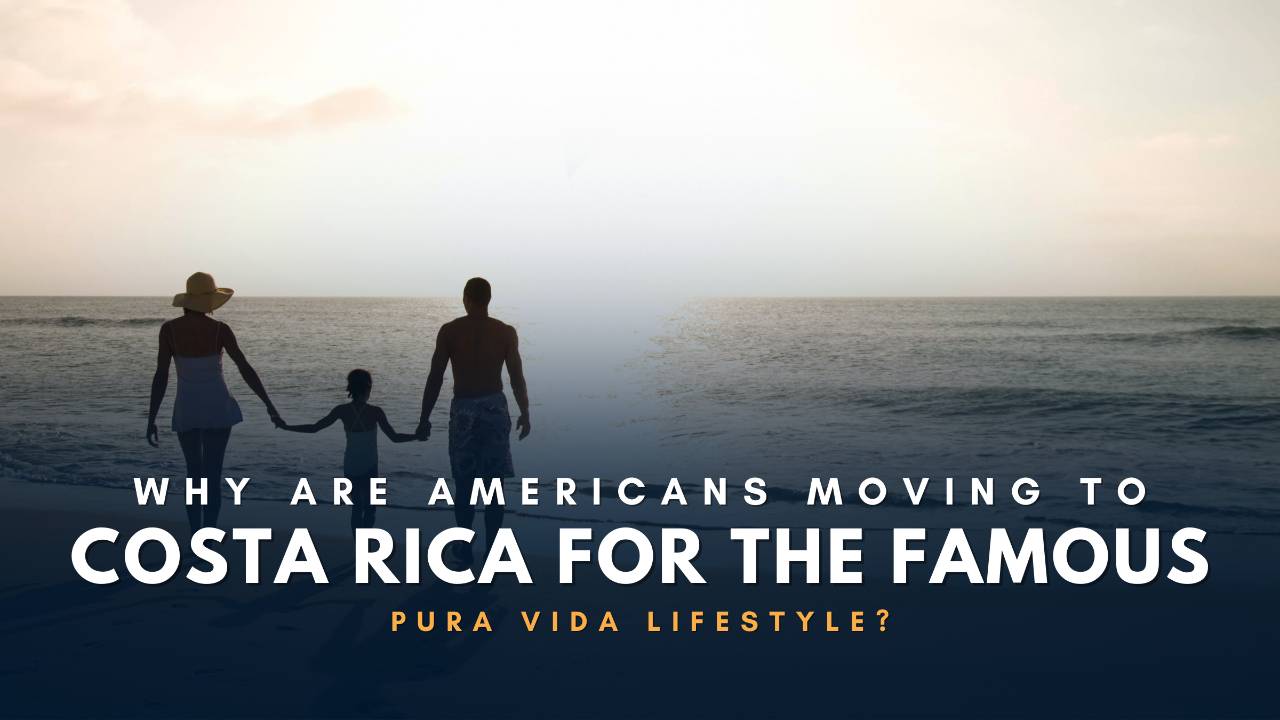
Why are Americans moving to Costa Rica for the famous Pura Vida lifestyle?
If you walk through the weekly feria (farmers’ market) in Atenas or catch the sunset at a beachfront café in Nosara, you’ll notice a distinct shift in the air. The accents of the United States are as common as the call of the howler monkeys. But this isn't just a wave of vacationers; it is a full-scale demographic movement.
By 2026, the number of Americans relocating to Costa Rica had hit record highs. While the country has always been a haven for retirees, the "new expat" of today is younger, more tech-savvy, and seeking something deeper than just a lower tax bracket. The "American Dream" is being redefined, and for thousands, it is being found on the lush, volcanic soil of this Central American gem.
So, why are Americans leaving the world’s largest economy for a country the size of West Virginia? The answer lies in a perfect storm of policy, digital freedom, and a collective yearning for a more intentional life.
The Digital Nomad Revolution: Remote Work 2.0
In 2026, the office is no longer a physical building; it’s a mindset supported by fiber-optic cables. Costa Rica was a pioneer in this space, launching its Digital Nomad Visa (also known as the Estancia para Trabajadores Remotos), which has been significantly streamlined over the last few years.
Unlike the high-stress, high-rent environments of San Francisco or New York, Costa Rica offers "work-life balance" in its literal form.
- Infrastructure: High-speed internet now reaches even the most remote surf towns, allowing professionals to attend Zoom meetings with a backdrop of the Pacific.
- Tax Incentives: Under the nomad law, remote workers are exempt from paying local income tax on their foreign earnings, making it a financial "no-brainer" for those earning USD.
- The "Middle Class" Shift: It’s no longer just CEOs. We are seeing teachers, graphic designers, and software engineers moving their families south, realizing they can live a "luxury" lifestyle on a mid-level U.S. salary.
Escaping the "Cost of Stress"
It isn't just that Costa Rica is "cheaper"—though with housing costs often 40% to 60% lower than in the U.S., that helps. It’s that the quality of life per dollar is exponentially higher. Americans are increasingly wary of the hidden "costs" of life in the States: the cost of healthcare, the cost of processed food, and the mental cost of political polarization.
Healthcare That Actually Heals
Costa Rica’s healthcare system is consistently ranked as one of the best in Latin America. Expats have access to the Caja (the public system) for a small monthly fee, but many opt for private insurance, which provides world-class care at a fraction of U.S. costs. In 2026, "medical tourism" has evolved into "medical residency," where Americans move here specifically to manage aging or chronic conditions in a system that prioritizes the patient over the insurance claim.
The "Blue Zone" Effect
The Nicoya Peninsula is one of the world’s five Blue Zones—areas where people live the longest and healthiest lives. Americans are moving here to "bio-hack" their longevity. The diet of fresh mangoes, black beans, and farm-to-table produce isn't a trendy diet here; it’s just lunch. The result? Expats frequently report losing weight, lowering blood pressure, and ditching anti-anxiety medications within months of arrival.
A Sanctuary of Stability (No Army, No Problem)
In a global climate characterized by volatility, Costa Rica stands out as a "Switzerland of the Tropics." Since 1948, the country has had no standing army, choosing instead to invest those funds into education and conservation.
For many Americans disillusioned by domestic political division or concerns over safety, the peaceful, democratic stability of Costa Rica is a massive draw. The local philosophy of Pura Vida isn't just about being relaxed; it’s a cultural commitment to avoiding conflict and cherishing the moment. For a family coming from a high-tension suburb in the U.S., the social harmony of a Tico neighborhood feels like a deep, collective exhale.
Environmental Consciousness as a Way of Life
Costa Rica isn't just "green" for the photos; it’s a world leader in sustainability. With 25% of its land protected in national parks and nearly 100% of its energy coming from renewable sources, the country appeals to the "Eco-Conscious American."
Modern expats are looking for:
- Off-grid opportunities: The Southern Zone (Ojochal and Uvita) is seeing a boom in solar-powered, self-sufficient homesteads.
- Regenerative Living: Americans are joining local "fincas" (farms), learning to grow their own food and protect local watersheds.
- Climate Resilience: As weather patterns shift, the microclimates of the Central Valley offer a consistent, "eternal spring" temperature that requires neither heating nor air conditioning—significantly reducing one's carbon footprint and utility bills.
The Cultural Bridge: "Tico Time" vs. The Clock
Perhaps the most profound reason Americans are moving to Costa Rica is the desire to reclaim their time. In the U.S., worth is often tied to productivity. In Costa Rica, worth is tied to community.
While the "slow pace" of bureaucracy can be a frustration at first, most Americans eventually fall in love with "Tico Time." It’s the permission to stop and talk to a neighbor for twenty minutes, to watch the sunset every single evening, and to prioritize a family meal over a late-night email. This cultural integration provides a sense of belonging that the isolated, car-centric culture of many U.S. suburbs lacks.
Conclusion: A New Horizon
Americans are moving to Costa Rica in 2026 because they are realizing that "standard of living" and "quality of life" are not the same thing. One is measured by the size of your house; the other is measured by the peace in your heart.
By combining modern digital infrastructure with ancient, community-focused values, Costa Rica offers a blueprint for how to live in the 21st century without losing your soul to the machine. Whether it's for the financial relief, the physical health benefits, or the simple joy of a tropical breeze, the move to Costa Rica is more than a change of address—it’s a change of destiny.


